The Friend’s Apartment
Klara and the SunThe Friend’s Apartment is a townhouse residence whose carefully differentiated façades conceal how alike its neighboring homes are. During the visit when Josie waits for the Father, it becomes a place of anticipation and reunion; later, its darkened rooms hold the consequences of a fraught conversation between Josie and the Mother. Seen through Klara’s attentive perspective, the apartment is both a domestic setting and a vantage point from which family loyalties, care, and separation come into view.
Setting and Layout
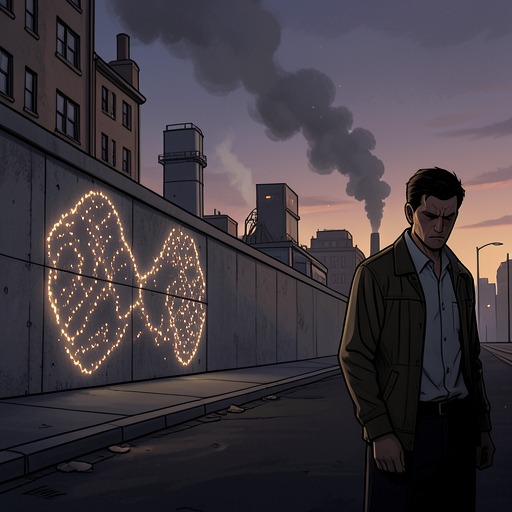
The apartment occupies one townhouse in a row of six. From the Main Lounge window, Klara observes that each house has been painted a slightly different color, apparently to keep residents from climbing the wrong steps and entering a neighbor’s home. The distinctions are practical rather than substantial: at night, the Friend’s Apartment is difficult to distinguish from its neighbors, and the Mother has to lead Klara up the correct steps after their return.
Inside, the Main Lounge is organized around a triple window overlooking the street. Josie lies on a leather sofa there with a paperback from the black bookshelves, while the Sun’s pattern falls across her raised knees. The Father’s anticipated arrival makes the window useful: once Klara understands that Josie is relying on her to watch for his taxi, she gives up exploring the apartment and keeps watch instead. The ordinary furnishings thus acquire the pressure of a waiting room, shaped by Josie’s anxiety and Klara’s responsibility to alert her.
The Father’s Arrival
The wait brings the apartment’s interior and street-facing view into close relation. Taxis are rare on this street, though cars pass quickly beneath a long-arm traffic signal; after the Mother’s anxious voice carries from the next room, a taxi slows outside. Klara cannot see into it from the elevated Main Lounge, but the Mother falls silent, and Klara recognizes the arrival before Josie has looked up from her book.
Josie initially dismisses her Father as undeserving of fuss, then tells Klara to give him a chance and insists that he is super-smart. He emerges from the taxi as a tall, stooping figure in a gray raincoat, carrying a paper bag carefully in both hands. After entering the townhouse, he appears in an office jacket over a tired brown sweater. He looks around for somewhere to put down the bag as though preparing to embrace Josie, but she steps forward and puts her arms around him without making him set it down. He closes his eyes and rests his cheek against her head; they remain still together, in a greeting different from the rocking farewells Josie shares with the Mother.
Family Care and Competing Needs
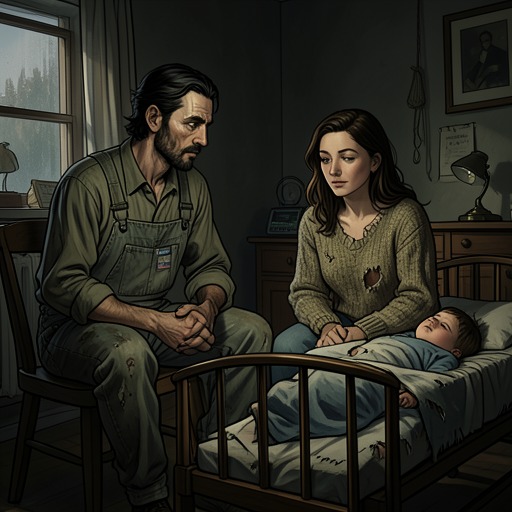
The apartment is also a setting for the Mother’s effort to manage Josie’s illness and loneliness. On a later night, the Mother brings Klara back quickly because she is anxious about Josie being alone there. She asks Klara to enter quietly, says Josie should be asleep, and warns against turning on lights that might disturb her. The Main Lounge is unchanged from the earlier visit, except that it is dark; Josie’s paperback remains on the rug where she dropped it while waiting for the Father. That abandoned book links the quiet nighttime room to the earlier scene of anticipation.
The Mother then confides that she and Josie had a strange conversation. Josie explains that her Mother had offered to give up her job and stay with her all the time, if Josie wanted it. The proposal would make the Mother Josie’s constant companion, but it would also mean that the family would no longer need Klara. Josie says she rejected the arrangement: her Mother did not truly want to leave her job, and Josie did not want to give up Klara. In the shadows of the Second Bedroom, Klara suggests that the Mother may have made the offer because she feared Josie’s loneliness. The scene makes the apartment a place where care is presented not as a simple solution but as a choice with costs for the people who give and receive it.
A Viewpoint on Relationship and Separation
The apartment’s rooms repeatedly position Klara as an observer who is also entrusted with practical care. She watches the street for the Father, notices the Mother’s anxious voice, and later returns to Josie’s room while the Mother leaves for the night. Her attention gathers small details—the fallen paperback, the half-raised blind, the darkened lounge—into a record of what the family says and what it cannot fully settle.
That role gives the residence significance beyond shelter. The Father’s arrival briefly brings Josie and him together in an embrace; the later conversation exposes the strain in the Mother’s attempt to balance work, constant companionship, and Klara’s place in Josie’s life. The apartment also frames the broader divergence between Josie and Rick: although they still show kindness to one another, they are preparing very different futures. Its domestic scenes therefore hold both connection and separation, without resolving the choices that divide the family’s hopes.